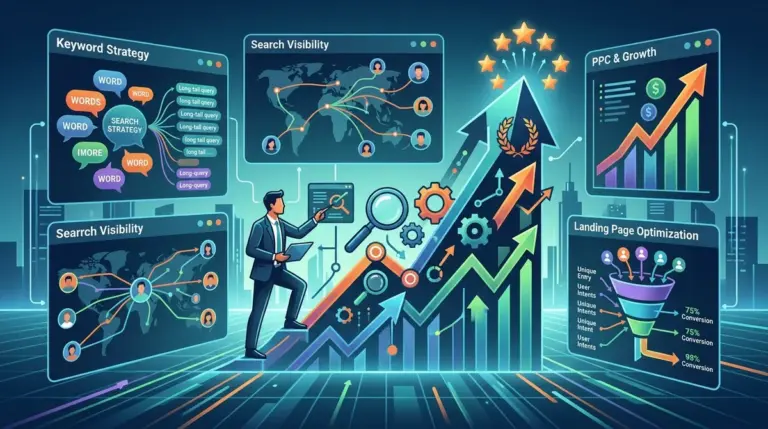
SEO backlogs are where growth goes to die. Most marketing teams operate with a laundry list of technical fixes, content updates, and link-building targets that far exceed their monthly bandwidth. The result is a "scattergun" approach where high-effort, low-reward tasks consume the same resources as high-impact revenue drivers. To scale organic performance, you must move beyond the "audit and fix" cycle and adopt a prioritization framework based on three variables: revenue potential, implementation speed, and resource cost.
The Hierarchy of SEO Impact
Not all optimizations are created equal. A meta description update on a low-traffic blog post provides negligible ROI compared to fixing a broken internal link structure on a high-converting category page. To prioritize effectively, categorize every task into one of four buckets:
- Critical Fixes: Issues preventing indexing or causing massive ranking drops (e.g., accidental noindex tags, server timeouts, or broken robots.txt).
- Low-Hanging Fruit: Optimizing pages already ranking in positions 4–10 for high-intent keywords.
- Strategic Growth: Creating new content for high-volume, mid-funnel keywords that your competitors currently own.
- Technical Maintenance: Incremental improvements like image compression or schema markup on secondary pages.
Technical Prioritization: Plugging the Leaks
Technical SEO should be prioritized based on its proximity to the crawl path and conversion funnel. If a search engine cannot efficiently crawl your site, your content quality is irrelevant. Start with structural issues that affect the entire domain before moving to page-level tweaks.
Crawl Budget and Indexation Control
If your site has over 10,000 pages, crawl budget is a primary concern. Prioritize the removal of "thin" pages—such as filter results, tag pages, or outdated archive pages—that dilute your site's authority. Use your log files to identify which sections Googlebot spends the most time on. If the bot is wasting resources on non-canonical URLs, implementing proper 301 redirects or canonical tags becomes a top-tier priority.
Core Web Vitals and User Experience
Speed is a tie-breaker in competitive niches. However, do not chase a perfect 100/100 Lighthouse score at the expense of functionality. Focus specifically on Largest Contentful Paint (LCP) and Cumulative Layout Shift (CLS). A high CLS score on a checkout or lead-gen page directly correlates to lost revenue; this is a high-priority task. Conversely, optimizing LCP on a "Contact Us" page is a lower priority than optimizing it for your primary service pages.
Pro Tip: Before assigning a developer to a technical task, calculate the "Lost Opportunity Cost." If a slow-loading landing page has a 5% conversion rate but a 40% bounce rate, fixing the speed issue is worth more than launching three new blog posts.
Content Optimization: The Striking Distance Strategy
The fastest way to see a spike in traffic is not by writing new content, but by refining what already exists. Identify "striking distance" keywords—terms where your site currently ranks on the bottom of page one or the top of page two. These pages have already proven they can rank; they just need a push.
Best for: Marketing managers needing to show quick wins within a 30-day window.
To prioritize these, look at the delta between your current position and position one. Moving from position 8 to position 2 can result in a 300% to 500% increase in click-through rate (CTR). Prioritize these updates by:
- Refreshing outdated statistics or data points.
- Adding missing subheadings that cover related "People Also Ask" questions.
- Improving internal linking from high-authority pages to these striking-distance targets.
- Optimizing the title tag for a higher CTR by testing different value propositions (e.g., "Best of 2024" vs. "Complete Guide").
The SEO-Specific ICE Framework
To remove subjectivity from your roadmap, score every task using a modified ICE framework (Impact, Confidence, Ease). Assign a score of 1–10 for each category.
Impact: How much will this move the needle on revenue or organic traffic? High impact tasks are those that target high-intent keywords or fix sitewide technical barriers.
Confidence: How certain are you that this task will produce the expected result? A task based on a proven case study or direct competitor data scores higher than a speculative "best practice."
Ease: How many resources (hours, budget, dev time) does this require? A task that requires five minutes of a copywriter's time is prioritized over a task requiring two weeks of backend engineering.
Priority Score = (Impact x Confidence) / Ease
Authority Building: Quality Over Quantity
Link building is often the most resource-intensive SEO task. To prioritize outreach, stop focusing on total link volume and start focusing on "link equity gap." Analyze the top three competitors for your target keyword. If they have an average of 50 referring domains and you have 5, you have a massive gap. If you have 45 and they have 50, your priority should shift to content quality or internal linking rather than more outreach.
Prioritize link reclamation—finding broken links pointing to your site or unlinked brand mentions—as these are the easiest "wins" in the authority category. They require minimal effort compared to cold outreach for guest posts.
Operationalizing Your SEO Roadmap
Execution fails when the roadmap is too broad. Limit your focus to three major initiatives per quarter. For example, Q1 might focus on technical debt and mobile usability, while Q2 shifts to content expansion for a new product line. By narrowing the focus, you ensure that tasks are actually completed rather than sitting in a "pending" state for months. Use a rolling 30-60-90 day plan to keep the team aligned on the highest-scoring ICE tasks, and be prepared to deprioritize "shiny object" trends that do not align with your core revenue goals.
SEO Prioritization FAQ
How do I handle sudden ranking drops?
Drop everything else. A sudden, significant drop in rankings usually indicates a technical failure or a manual action. Use Search Console to check for "Security & Manual Actions" and "Core Web Vitals" errors immediately. This is always a Priority 1 task.
Should I prioritize new content or updating old content?
If you have a library of content that is 12+ months old, updating it usually yields a faster ROI than creating new pieces. Google favors fresh content, and you are starting with existing authority rather than building from zero.
Is mobile optimization still a high priority?
Yes. Since Google uses mobile-first indexing, any issue that exists on your mobile site but not on your desktop site is a critical error. Mobile usability issues should be prioritized alongside major technical fixes.
What is the most common mistake in SEO prioritization?
Focusing on "vanity metrics" like total keyword count or traffic to non-converting pages. Always prioritize tasks that correlate with the bottom of the funnel or lead to a measurable increase in conversion-qualified traffic.