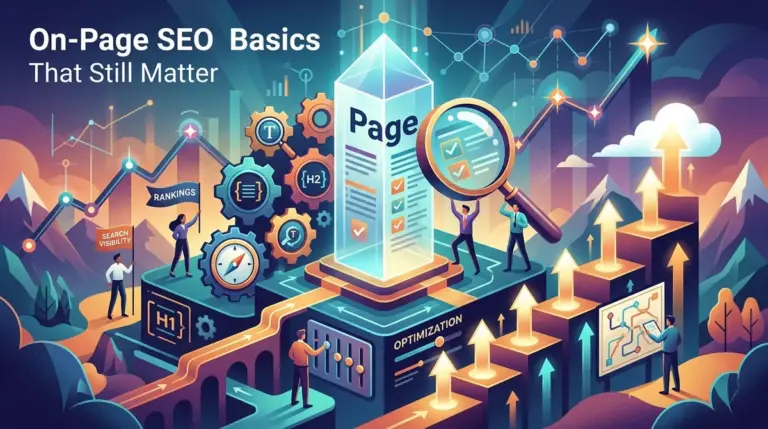
Service pages are the highest-value real estate on a commercial website, yet they are frequently the most neglected from an organic search perspective. Most agencies and in-house teams treat them as static brochures, focusing on aesthetic design while ignoring the structural requirements of search engines. To rank a service page, you must bridge the gap between transactional intent and informational depth. A page that only says "we do X" will never outrank a page that explains "how we do X, for whom, and what the specific outcomes are."
Mapping Keywords to Commercial Intent
The primary failure in service page optimization is targeting head terms with no qualifying modifiers. If you are a boutique law firm in Chicago, ranking for "lawyer" is impossible and commercially useless. You need to map your service pages to high-intent, long-tail clusters that reflect how users actually search when they are ready to hire.
Focus on "Service + Industry" or "Service + Outcome" modifiers: Instead of "Cloud Migration," target "Cloud Migration Services for Financial Institutions" or "Legacy to Azure Cloud Migration." This narrows the competition and increases the conversion rate because the landing page content more accurately mirrors the searcher's specific pain point.
- Primary Keyword: The core service (e.g., "Industrial Roof Repair").
- Secondary Keywords: Synonyms and process-oriented terms (e.g., "commercial flat roof patching," "EPDM membrane repair").
- LSI Keywords: Contextual terms that prove topical authority (e.g., "OSHA compliance," "thermal imaging leak detection," "warranty-backed materials").
Structuring Content for Scannability and Crawlability
Google’s helpful content guidelines prioritize pages that provide a comprehensive answer to a query. For a service page, this means moving beyond a three-paragraph summary. You must address the "What, How, and Why" of your offering to satisfy both the algorithm and the human lead.
Use a logical H2 and H3 hierarchy to break down the service. A standard high-performing structure includes:
The Problem Statement: Acknowledge the specific challenge the client is facing. This builds immediate relevance.
The Solution/Process: Detail the methodology. If you have a proprietary four-step process, list it. Search engines reward specific, unique information that cannot be found on every other competitor's site.
Proof Points: Integrate case study snippets or client logos directly into the service page. Do not just link to a "Results" page; keep the evidence within the conversion path.
Pro Tip: Avoid using "accordion" or "read more" tabs for your most important service descriptions. While they save visual space, content hidden behind clicks can sometimes be devalued or indexed less effectively than visible text, and it adds friction to the user experience.
Technical SEO and Schema for Service Pages
Technical implementation is what separates a ranking page from a buried one. Beyond standard meta tags, you must utilize JSON-LD schema to give search engines explicit context about what you are selling.
Service Schema: Use the Service type in your schema markup. This allows you to define the serviceType, provider, and areaServed. If you are a local business, nesting this within LocalBusiness schema is essential for appearing in the Map Pack and localized organic results.
URL Structure: Keep it flat and descriptive. /services/commercial-litigation/ is superior to /services/service-id-402/. The URL is a minor ranking factor but a major usability factor; it tells the user exactly where they are before the page even loads.
The Hub-and-Spoke Internal Linking Strategy
A service page should not exist in a vacuum. To build topical authority, you must surround your main service page (the "Hub") with supporting blog content (the "Spokes").
If your main service is "Penetration Testing," your blog should feature articles like "How Often Should You Run a Pen Test?" or "The Difference Between Vulnerability Scanning and Pen Testing." Each of these articles must link back to the main service page using descriptive anchor text. This passes internal PageRank and signals to Google that the service page is the authoritative destination for that topic.
Best for: Agencies looking to dominate a specific niche. By saturating the site with related informational content, you prove to search engines that your service page is backed by genuine expertise.
Executing the Service Page Audit
To improve existing service pages, start with a gap analysis. Compare your page's word count, media richness (images, videos, diagrams), and backlink profile against the top three results for your target keyword. If the top results all feature video testimonials and 1,200 words of technical breakdown while your page has 300 words and a stock photo, you have a clear roadmap for optimization.
Check your Search Console data for "Impressions" vs. "Clicks." If a service page has high impressions but low clicks, your meta title and description are likely failing to communicate value. If it has high clicks but a high bounce rate, the content on the page is not fulfilling the promise made in the SERP.
Service Page Optimization FAQ
How long should a service page be for SEO?
There is no fixed word count, but most top-ranking service pages for competitive terms fall between 800 and 1,500 words. The goal is to be the most helpful resource for that specific service, not to hit a specific character limit.
Should I create separate pages for every service?
Yes. If the search intent is different, the page should be different. "Residential Plumbing" and "Commercial Plumbing" have different buyers, different pain points, and different keyword sets. Combining them dilutes your relevance for both.
How do I optimize for local service searches?
Include your city and region in the H1, meta title, and localized schema. Ensure your NAP (Name, Address, Phone Number) data on the page matches your Google Business Profile exactly. Mentioning local landmarks or specific neighborhoods can also help signal geographic relevance.