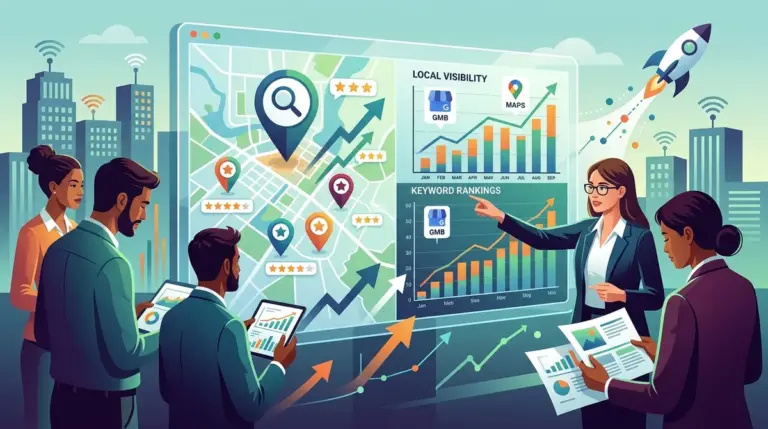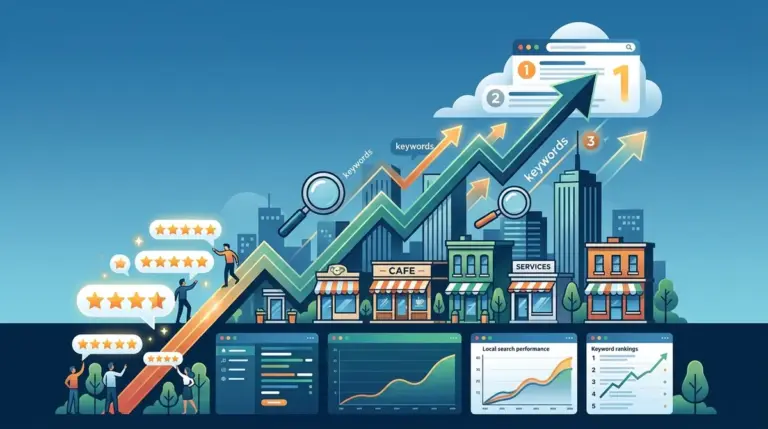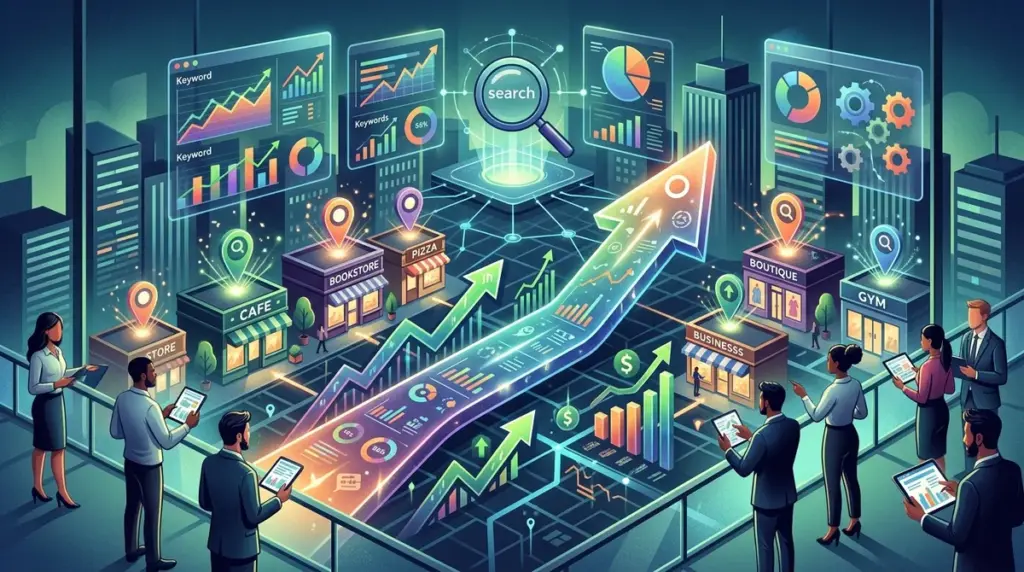
Local search is a zero-sum game played within a three-mile radius. For service-based businesses and brick-and-mortar retailers, ranking fourth in the local pack is equivalent to being invisible. Data suggests that the top three local results capture nearly 44% of all clicks, while the "More Places" button acts as a graveyard for businesses with incomplete data or poor proximity signals. To drive real growth, a local strategy must move beyond basic NAP (Name, Address, Phone) consistency and focus on entity-based relevance, review velocity, and hyper-local content architecture. To drive real growth, a local strategy must move beyond basic NAP (Name, Address, Phone) consistency and focus on entity-based relevance, review velocity, and hyper-local content architecture, as how reviews influence local SEO performance is a key differentiator.
Optimizing the Google Business Profile Entity
The Google Business Profile (GBP) is no longer a directory listing; it is a dynamic entity that feeds Google’s Knowledge Graph. To maximize its performance, you must treat it as a secondary homepage. The primary category you select dictates 60% of your ranking potential for core terms. If you are a "Personal Injury Lawyer," do not settle for "Lawyer" as your primary category. Specificity reduces competition and increases intent alignment.
Best for: Improving Local Pack (Map Pack) visibility and click-through rates (CTR).
- Secondary Categories: Use all nine available slots, but only if they are strictly relevant. Over-stuffing unrelated categories dilutes your primary signal.
- Justifications: Google often displays snippets like "Their website mentions [service]" or "Sold here" in the local pack. These are triggered by matching your website content and GBP attributes to the user's specific query.
- Photo Quality and Metadata: Upload high-resolution images of the storefront, staff, and completed work. While Google officially strips EXIF data, the visual AI identifies objects within photos to verify your business type.
Pro Tip: Use the "Questions and Answers" section proactively. Do not wait for customers to ask questions. Post your own frequently asked questions and answer them from the business owner account. This allows you to seed the profile with high-intent keywords that Google’s algorithm uses to understand your service depth.
Hyper-Local Content and Neighborhood Landing Pages
Generic service pages fail in local SEO because they lack geo-relevance. If you serve multiple suburbs or neighborhoods within a city, a single "City" page is insufficient. You need a siloed architecture that addresses the specific needs and landmarks of each micro-market. You need a siloed architecture that addresses the specific needs and landmarks of each micro-market, and understanding how multi-location businesses should structure local pages is vital for this.
Structuring Geo-Specific Service Pages
A high-performing local landing page should include more than just a map embed. To prove relevance to Google’s crawlers, integrate localized data points:
1. Mention nearby landmarks or transit hubs to anchor your location in the physical world.
2. Include localized testimonials from clients in that specific neighborhood.
3. Embed a custom Google Map with a pinned location and directions from a well-known local intersection.
Avoid "cookie-cutter" content where only the city name is swapped. Google’s helpful content updates penalize programmatic SEO that lacks unique value. Instead, discuss specific local regulations, weather patterns affecting your service, or community-specific projects you have completed.
Technical Local Signals and Schema Markup
Search engines require structured data to connect your website to your physical location with 100% certainty. Implementing LocalBusiness JSON-LD schema is non-negotiable. This script tells the crawler exactly what your operating hours are, what currencies you accept, and your precise latitude and longitude.
Key Schema Properties to Include:
- sameAs: Link to your GBP, Facebook, Yelp, and industry-specific profiles (like Avvo for lawyers or Houzz for contractors) to help Google "sync" your entity data across the web.
- areaServed: Define the specific zip codes or city boundaries you cover.
- hasMap: Provide the direct URL to your Google Maps CID link.
Beyond schema, mobile performance is a critical local ranking factor. Most local searches occur on mobile devices while the user is in transit. A two-second delay in load time on a 4G connection will result in a bounce to a competitor with a leaner, faster-loading landing page.
Review Velocity and Sentiment Analysis
Google does not just look at your average star rating; it analyzes review velocity (how often you get new reviews) and the specific language used within those reviews. A business with 500 reviews from three years ago will be outranked by a business with 50 reviews gained steadily over the last six months.
Strategic Review Management:
Encourage customers to mention the specific service they received and the location. When a review says, "The best HVAC repair in Downtown Seattle," it reinforces your relevance for those specific keywords. When responding to reviews, avoid generic "Thanks for the business" templates. Use your response to reiterate your service and location: "We were happy to help with your emergency pipe repair in West Hills!"
Local Link Building and Geo-Relevance
Traditional backlink metrics like Domain Authority (DA) are less important in local SEO than "Geo-Authority." A link from a local little league team, a neighborhood blog, or a city chamber of commerce carries more weight for local rankings than a generic guest post on a high-DA marketing site. These links signal to Google that your business is a pillar of the local community.
Actionable Link Targets:
1. Local sponsorships (events, charities, sports).
2. "Best of [City]" awards and nominations.
3. Collaborative content with non-competing local businesses (e.g., a realtor interviewing a local mortgage broker).
Executing the Local Growth Roadmap
To move the needle on local revenue, stop treating SEO as a technical checklist and start treating it as a digital footprint of your physical presence. Begin by auditing your GBP for category accuracy and attribute completeness. Move to your website and ensure every service area has a dedicated, high-value landing page supported by LocalBusiness JSON-LD. Finally, implement a systematic review acquisition process that ensures a steady stream of fresh, keyword-rich feedback. Local SEO is won through consistency and the accumulation of small, localized signals that prove to Google you are the most prominent and reliable option in your specific corner of the world.
Frequently Asked Questions
How long does it take to see results from Local SEO?
Initial technical fixes and GBP optimizations can show movement within 30 to 60 days. However, significant gains in the Local Pack for competitive terms typically require 4 to 6 months of consistent review acquisition and local link building.
Do I need a physical office to rank in a specific city?
While a physical address within the city limits is the strongest ranking signal, "Service Area Businesses" (SABs) can still rank by defining their service radius in GBP. However, SABs often face a steeper climb against competitors with verified physical storefronts in the city center.
How do I handle multiple locations without cannibalizing my rankings?
Each location must have its own unique GBP profile and a dedicated landing page on your main domain. Do not point all GBP listings to your homepage. Instead, link each profile to its corresponding neighborhood or city-specific page to maintain clear geographic relevance for each entity.
Are citations still important for Local SEO?
Citations on major aggregators (Data Axle, Neustar, Foursquare) are still necessary for establishing a baseline of trust. However, the "quantity" of citations is no longer a primary ranking factor. Focus on the quality and accuracy of the top 20-30 directories rather than chasing hundreds of low-quality links.