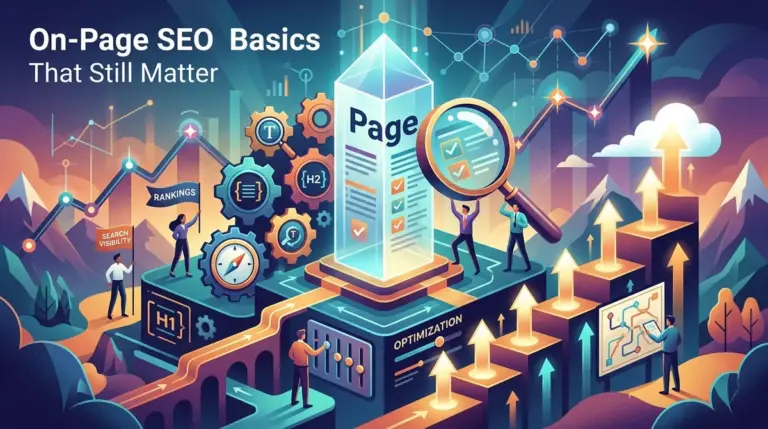
Marketing budgets often prioritize the "new"—new blog posts, new landing pages, and new campaigns. However, the highest ROI in search engine optimization rarely comes from a blank Google Doc. It lives in your existing index. For most established domains, 80% of traffic is driven by 20% of pages, many of which are likely decaying or sitting just outside the top three results. Optimizing these "striking distance" pages yields faster ranking shifts and better conversion rates than waiting six months for a new URL to gain authority. Focusing on optimizing these pages means revisiting the on-page SEO basics that still drive significant organic visibility.
Identifying Striking-Distance Keywords and Low-Hanging Fruit
The first step in a refresh strategy is a cold, data-driven audit of your current rankings. Use Google Search Console to filter for queries where your average position is between 4 and 15. These are your striking-distance keywords. They have already earned Google’s trust but lack the specific relevance or authority signals required to break into the top three spots where the majority of click-through traffic resides.
Best for: Sites with at least 12 months of ranking history and established domain authority.
When reviewing these pages, look for high-impression, low-click counts. If a page has 10,000 impressions but a 0.5% CTR at position 7, the meta title and description are failing to satisfy the user’s search intent. Conversely, if the CTR is high but the bounce rate is astronomical, the page content likely doesn't deliver on the promise made in the SERP snippet.
Aligning Content with Evolving Search Intent
Search intent is not static. A keyword that triggered a "how-to" guide three years ago might now trigger a "top 10 tools" list or a video carousel. If an existing page has dropped from the first page, the primary cause is often an intent mismatch rather than a lack of backlinks.
Analyze the current Top 3 results for your target keyword. Are they long-form essays, interactive calculators, or product category pages? If your page is a 2,000-word blog post but the top results are all comparison tables, no amount of keyword stuffing will fix your ranking. You must restructure the page to match the format Google currently favors for that specific query.
Pro Tip: Check the "People Also Ask" (PAA) boxes for your primary keywords. These questions are a roadmap for content expansion. By answering these specific queries within H3 subheadings on your existing page, you increase your chances of capturing featured snippets and improving topical depth without creating a separate URL.
Technical Remediation and Core Web Vitals
A content refresh is the ideal time to fix technical debt that may be throttling a page’s performance. High-ranking pages often suffer from "image bloat" or outdated scripts that slow down mobile load times. Use PageSpeed Insights to identify specific elements causing Layout Shift (CLS) or high Interaction to Next Paint (INP) scores.
- Compress all legacy images and convert them to WebP format.
- Audit internal links: ensure the page isn't buried four clicks deep in your site architecture.
- Update outdated statistics and remove broken external links that lead to 404 errors.
- Check mobile rendering to ensure CTA buttons aren't overlapping text or difficult to click.
The Internal Link Equity Transfer
Existing pages often sit in isolation, disconnected from newer, high-authority content. To boost a stagnant page, you must manually bridge the gap between your "power pages" (those with the most backlinks) and your "striking distance" pages. This is the most underutilized lever in SEO. Use a site:search on Google to find every mention of your target keyword across your own domain, then ensure those mentions link back to the page you are optimizing with descriptive, varied anchor text.
Optimizing for Conversion and User Experience
Traffic is a vanity metric if it doesn't move the needle on revenue. When you reopen an old page for optimization, look at it through the lens of a conversion rate optimizer. Many older posts have outdated CTAs, broken lead magnets, or links to products that no longer exist. Replace generic "Contact Us" buttons with specific, value-driven offers related to the page's topic.
Metrics to track: Scroll depth and time-on-page. If users are leaving after 30 seconds, consider adding a "Key Takeaways" summary at the top or an interactive element like a quiz or a video to increase engagement signals.
Executing the Content Refresh Workflow
Do not simply change the "Last Updated" date and call it a day. Google’s algorithms are sophisticated enough to recognize superficial changes. To trigger a meaningful re-crawl and ranking boost, you should aim to modify at least 20-30% of the page’s core content. This includes updating the introduction to be more concise, adding new expert quotes, and refining the conclusion to reflect current industry trends.
Once the updates are live, use the URL Inspection tool in Google Search Console to request a re-index. This forces the crawler to see your changes immediately rather than waiting for a scheduled crawl, which could take weeks for deeper pages.
Prioritizing Your Optimization Queue
Efficiency dictates that you should not optimize every page at once. Start with pages that have high commercial intent—those directly tied to lead generation or product sales. Next, move to pages that have seen a recent decline in traffic; it is easier to reclaim a lost position than to fight for a new one. Finally, tackle pages that are ranking on page two for high-volume terms. By systematically working through this queue, you ensure that every hour of SEO labor is spent where it will generate the most immediate impact on your bottom line.
Frequently Asked Questions
How often should I update my existing content?
High-traffic pages and those in fast-moving industries (like tech or finance) should be audited every six months. For evergreen topics, an annual review is usually sufficient to ensure links and statistics remain accurate.
Will changing the URL of an existing page hurt my SEO?
Yes, unless it is absolutely necessary for branding. Changing a URL requires a 301 redirect, which can result in a minor loss of link equity. It is almost always better to keep the existing URL and simply update the content on the page.
How long does it take to see results from a page refresh?
Unlike new content, which can take months to rank, refreshed content often shows movement in the SERPs within 2 to 4 weeks. If the technical fixes were significant, you might even see improvements in as little as 48 hours after re-indexing.
Should I delete old content that isn't performing?
Only if it has zero traffic, zero backlinks, and provides no value to the user. In most cases, it is better to "prune" by consolidating several weak, related pages into one comprehensive "power page" and using 301 redirects to pass any existing authority to the new version. This consolidation process is a key part of effective internal linking strategies that can boost your site's overall authority.