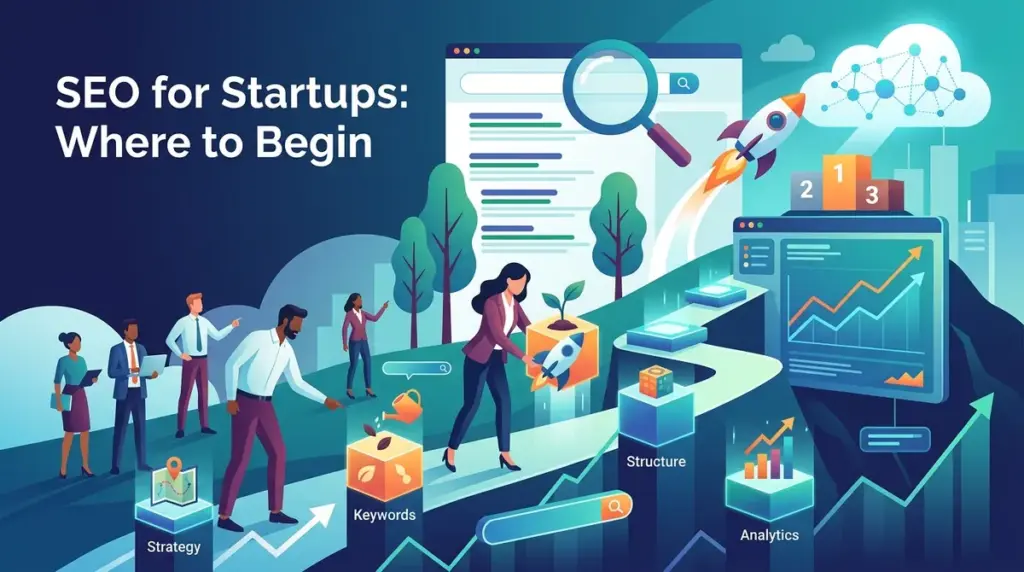
Startups often treat SEO as a "later" problem, prioritizing immediate PPC returns to satisfy investors or clear inventory. This delay is a strategic error. While paid search offers instant feedback, the customer acquisition cost (CAC) remains static or rises over time. SEO is the only channel where the cost per lead trends toward zero as the domain gains authority. For a startup with a limited runway, the goal isn't to rank for high-volume vanity terms; it is to dominate the specific niche where their product solves a painful problem.
The Technical Infrastructure of a Scalable Site
Before publishing a single word of content, the technical foundation must be airtight. Google’s mobile-first indexing means a startup’s site must perform flawlessly on low-end devices and slow connections. If your Largest Contentful Paint (LCP) exceeds 2.5 seconds, you are effectively paying a penalty in visibility before you even start.
Focus on: Clean URL structures that reflect site hierarchy. Avoid dynamic URLs with excessive parameters that confuse crawlers. Instead, use descriptive, hyphenated slugs that include the primary keyword for that page.
Crawl Budget and Index Management
Startups often iterate quickly, leading to "zombie pages"—old landing pages, staging environments, or discarded product categories that remain indexed. These dilute your site’s authority. Use Google Search Console to monitor the Index Coverage report. Any page that does not serve a specific user intent or conversion goal should be set to 'noindex' or redirected via a 301 to a relevant live page.
Pro Tip: Do not rely on your CMS's default robots.txt file. Explicitly disallow internal search result pages and tag archives to prevent duplicate content issues that can trigger "Crawl Paradox," where Google spends its time indexing low-value pages instead of your core product offerings.
High-Intent Keyword Selection
A common mistake is chasing keywords with the highest monthly search volume. For a startup, these terms are usually dominated by legacy players with massive backlink profiles. Instead, focus on "Jobs to be Done" (JTBD) keywords. These are queries where the user is actively looking for a solution to a specific hurdle.
- Comparison Keywords: "[Competitor] vs [Your Startup]" or "[Competitor] alternatives." These users are at the bottom of the funnel and ready to switch.
- Problem-Solution Keywords: "How to automate [specific task]" or "Software for [specific industry] compliance."
- Long-Tail Modifiers: Use modifiers like "for startups," "API-first," or "real-time" to filter out general browsers and attract qualified leads.
Mapping Content to the Funnel
Your keyword strategy must align with the user's journey. Top-of-funnel (ToFu) content should address broad industry pain points to build brand awareness. Middle-of-funnel (MoFu) content should provide deep-dive guides or white papers that showcase your expertise. Bottom-of-funnel (BoFu) content includes pricing pages, case studies, and integration docs. If your BoFu pages aren't optimized for "buy" or "demo" intent keywords, your organic traffic will never convert into revenue.
Topical Authority Over Content Volume
Google’s E-E-A-T (Experience, Expertise, Authoritativeness, and Trustworthiness) guidelines favor sites that demonstrate deep knowledge in a specific niche. Rather than writing 50 disparate blog posts, build a "Topic Cluster." Create one comprehensive pillar page (e.g., "The Ultimate Guide to SaaS Retention") and link it to 10-15 sub-topic articles (e.g., "Calculating Churn Rate," "In-app Onboarding Best Practices").
This internal linking structure signals to search engines that your site is a definitive resource on the subject. It also keeps users on your site longer, improving engagement metrics that indirectly influence rankings. Every piece of content should include a clear "Next Step" link to guide the user deeper into the cluster or toward a conversion point.
Link Acquisition through Product Narrative
Startups have a unique advantage in link building: they are news. Traditional "skyscraper" link building—emailing strangers to ask for links—is increasingly ineffective. Instead, leverage your founder’s story, unique data insights, or product launches to earn high-authority placements.
Best for: Building early domain authority. Reach out to industry-specific publications with proprietary data your product has gathered (anonymized, of course). Journalists crave original statistics. If your software manages logistics, publish a report on "The State of Last-Mile Delivery in 2024." One mention in a major trade journal is worth more than a hundred low-quality directory links.
Measuring SEO Success Beyond Rankings
Rankings are a leading indicator, but they are not a business metric. For a startup, the metrics that matter are Organic Conversions and Assisted Conversion Value. Use GA4 to track how many users who first landed on a blog post eventually converted via a direct visit or a branded search. This proves the long-term ROI of your SEO efforts to stakeholders who may be impatient for results.
Executing the 90-Day Organic Roadmap
The first three months of a startup's SEO strategy should be focused on momentum. In the first 30 days, resolve all critical technical errors and set up robust tracking. In days 31-60, produce your first topic cluster—one pillar and five supporting articles—targeting high-intent long-tail keywords. In the final 30 days, focus on distribution: share your content in niche communities like Hacker News, Reddit, or industry Slacks to drive initial traffic and earn natural backlinks.
Consistency is more important than intensity. A startup that publishes two high-quality, data-driven pieces of content per month will outperform one that publishes ten mediocre pieces and then goes silent for a quarter. SEO is a compounding asset; the earlier you start, the more defensible your market position becomes.
Startup SEO Frequently Asked Questions
How long does it take for a new startup site to rank?
Typically, it takes 4 to 12 months to see significant organic traction. This timeline depends on the competitiveness of the niche and the frequency of content publication. Technical fixes often show results within weeks, while keyword rankings for competitive terms require sustained authority building.
Should we hire an agency or an in-house SEO first?
In the early stages, a specialized consultant or agency is often more cost-effective. They provide the high-level strategy and technical auditing needed to set the foundation. As you scale and content becomes a primary growth lever, bringing an SEO lead in-house ensures brand consistency and faster execution.
Does social media activity help our SEO?
Social signals are not a direct ranking factor. However, social media drives traffic and visibility, which increases the likelihood of other sites linking to your content. High social engagement can also lead to faster indexing of new pages as crawlers find your links across multiple platforms.
Is AI-generated content safe for startup SEO?
AI can assist with outlines and research, but raw AI output often lacks the "Experience" and "Expertise" required by Google's E-E-A-T guidelines. For startups, where building trust is paramount, every piece of content should be edited by a human expert to ensure accuracy and a unique brand voice.